Holy India

Shri Mata Vaishno Devi Shrine

Katra, Jammu & Kashmir, India

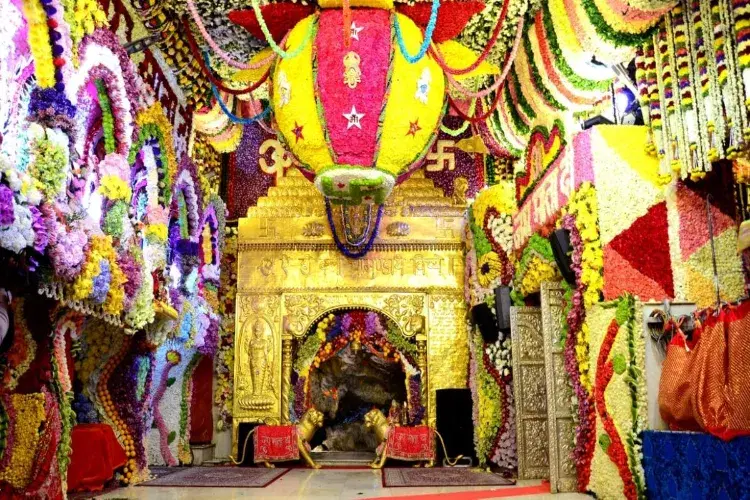
At a height of 5200 ft., on the tip of Trikuta mountain, is Vaishno Devi Mandir, the place where Maa had spent some time during her penance. Her journey culminated at the Holy Cave, where her human form merged with the astral form of her creators, the three supreme energies.

Mata Vaishno Devi

Mata Vaishno Devi

Mata Vaishno Devi is a manifestation of the Supreme Mother Goddess, Adi Shakti, embodying the combined energies of Maha Kali, Maha Lakshmi, and Maha Saraswati. 

According to beliefs, she meditated in the sacred cave of the Trikuta Mountains, establishing it as one of the most powerful Shakti Peethas. 

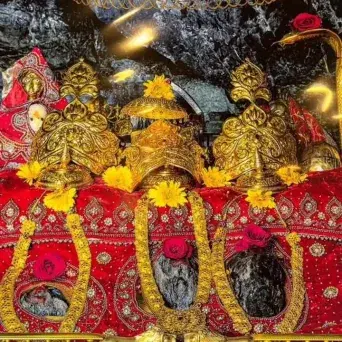
Mata Vaishnavi is present in the cave in the form of a tall rock with three heads, known as the “Pindies”. The leftmost represents Maha Kali, who holds the power of destruction. In the centre, you will see Maha Lakshmi, who brings wealth and prosperity. On the right is Maha Saraswati, who represents knowledge, wisdom and art. Together, they represent Hindu Tridevi. 

She is the compassionate mother who listens to the sincerest pleas of her devotees.

The Wonders of Vaishno Devi

Holy Pindies

Holy Pindies

The Holy Pindies remain warm to the touch even in the freezing Himalayan winter. A stream of pure water, called Charan Ganga, flows from beneath the Pindies throughout the year, even when the entire region is covered in snow. 

The silver coins and offerings dropped by devotees in the stream inside the cave never collect in one place but disappear, believed to be accepted by the Maa herself.
Journey from Katra to Bhawan

The First Steps of Faith

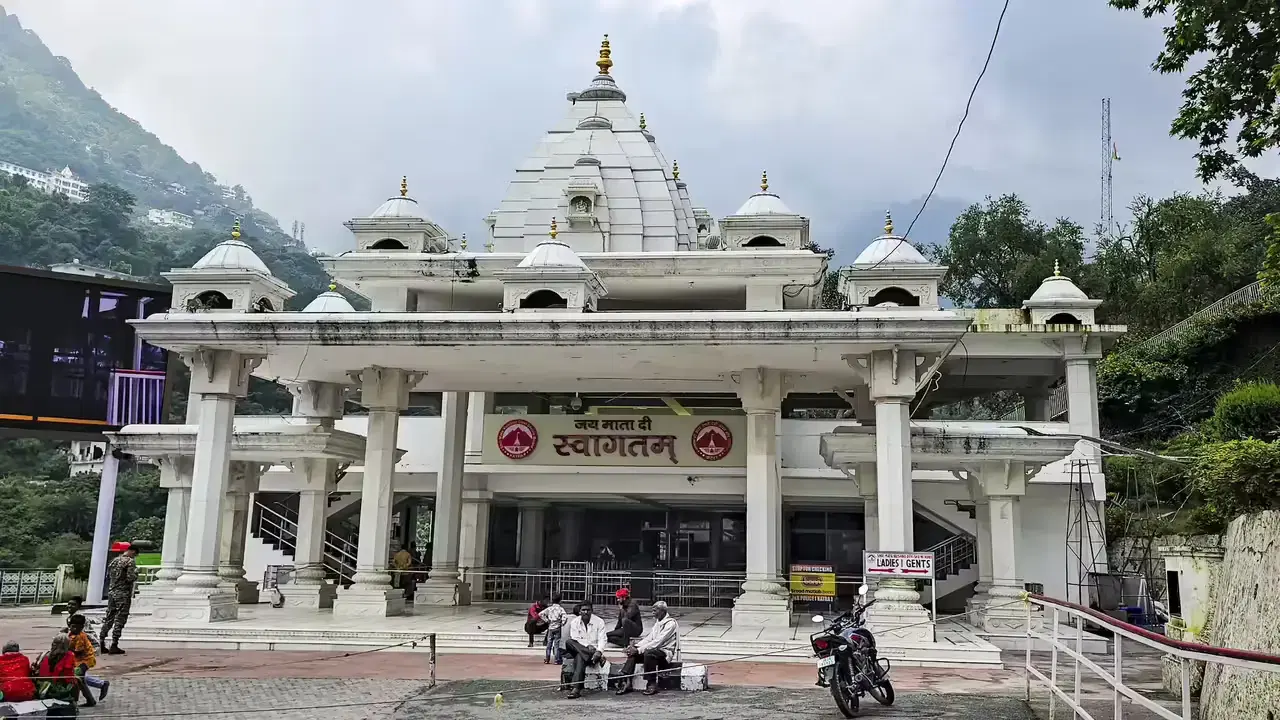
Your pilgrimage begins at Katra, the base camp town that buzzes with an energy unlike any other. As you complete the yatra registration, which the government mandates, you may feel a sense of being called by Maa. No longer a traveler, you are now a child of the mother, who has been out playing since dawn, and it's time to return home.

The moment you devotedly chant "Jai Mata Di" and take your first step towards the demanding 13-kilometer uphill trek, feel the warmth in your heart. 

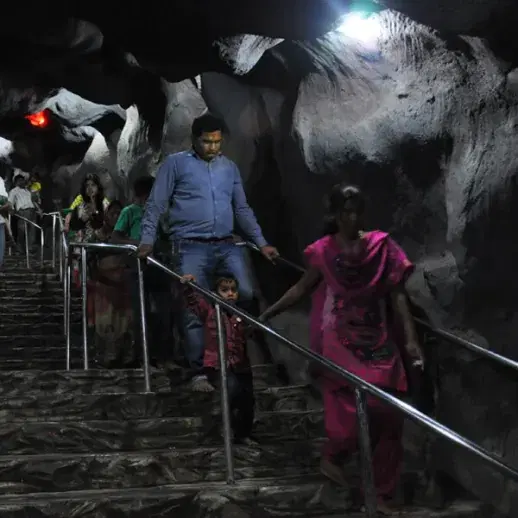
As the trek continues, the mountains are filled with continuous echoes of bhajans and Jai Mata Di. Maa’s children are not limited to any specific class or age; regardless of how old or how wealthy, everyone comes to her. Some are supporting each other, some are riding on shoulders, and some are using a stick to support their climb.

The first major stop in the trek is Banganga, a stream created by Mata Vaishnavi with her arrow. People stop here to perform a puja, and even drink the cold water that refreshes them for the climb ahead.

Next in line is Charan Paduka, Mother's footprints imprinted on a rock. Bow before them as countless have done before you. Feel the divine connection as it fills you with indescribable emotion and happiness.

After that is the Adhkuwari cave, where Mata Vaishno Devi meditated for nine months. The entry to this cave is a narrow passage, through which people crawl as if taking a spiritual rebirth. 

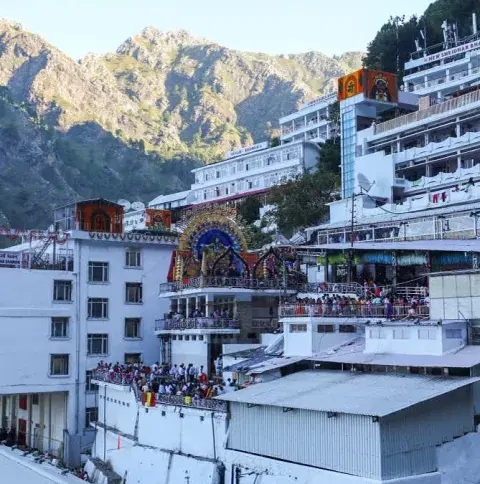
The remaining 6 km to Bhawan, the main complex housing the sacred cave, seem less daunting now. The tiredness somehow converts to energy as fellow devotees move forward in unison. Maa is waiting for you.

The First Steps of Faith

Approaching the Holy Cave

This is the last leg of the climb. As you near the Bhawan, you can see the illuminated shrine in the distance, against the dark mountains. The atmosphere changes, the chants grow louder, the crowd denser and the air electric with devotion.

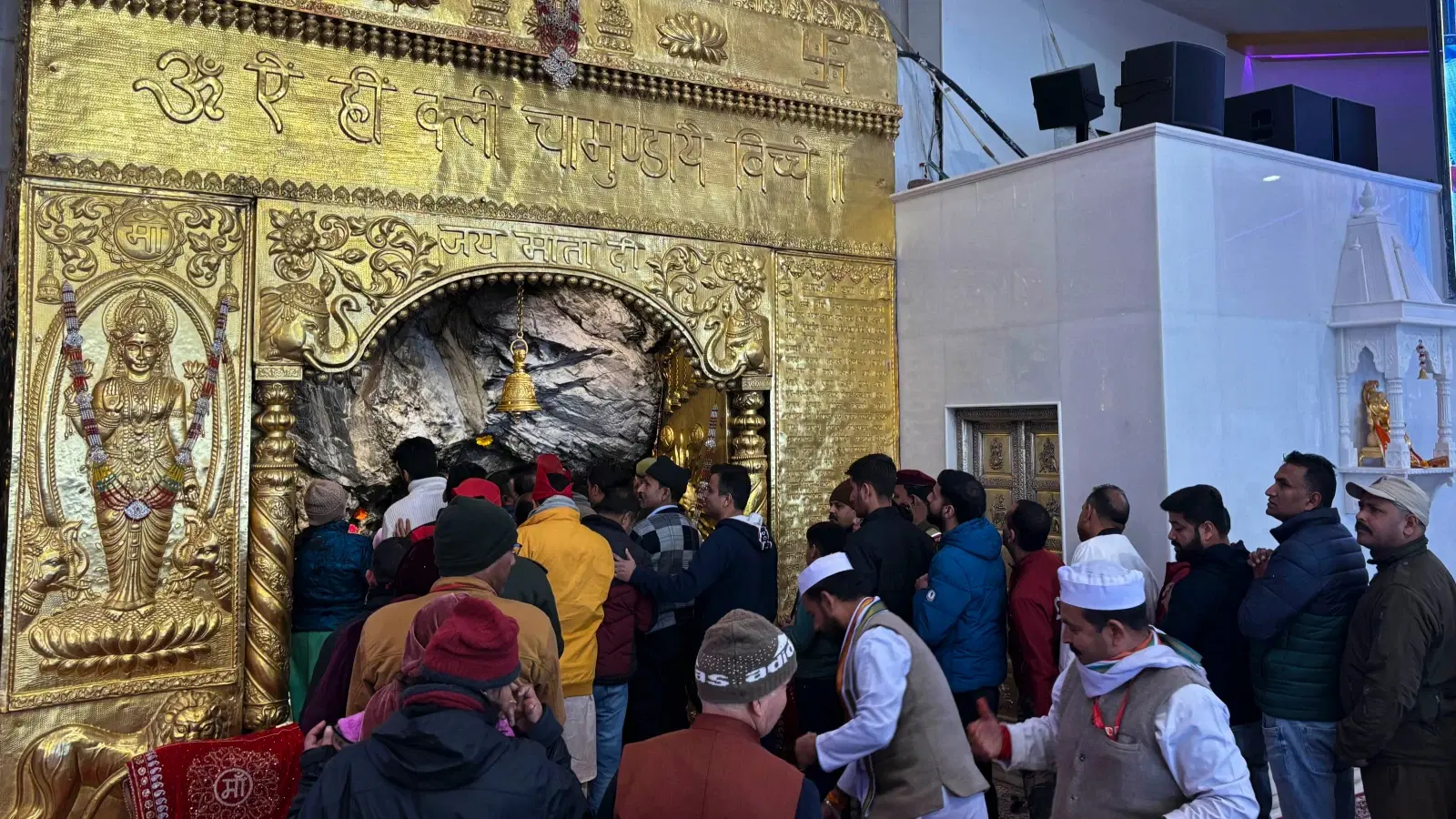
Please deposit your belongings, such as smartphones or other electronic devices, at the Cloakroom. Join the queue, with a bit of excitement in your heart, which slowly moves to the inner sanctum for the Darshan.

Approaching the Holy Cave

Moment of Darshan

The cave, or inner sanctum, is ancient and features a low ceiling. You have to bend low, or even crawl through the crowd and the dim light, before coming face to face with the three Pindies.

Your eyes well up, though you don't know why. Your hands automatically fold in prayer. In that, you feel utterly one with the divine. The natural rock formations, each approximately eighteen inches tall, radiate blessings from the Tridevi.

On the left is Maha Kali, with her power of destruction; right next to it, in the center, is Maha Lakshmi, the bringer of wealth and prosperity. Maha Sarawati is at the right, with knowledge, wisdom and art at her grace.

Your Expedition to Vaishno Devi Mata Mandir is not just a journey to a temple but to yourself, to your faith, to something larger than your existence. Every struggle suddenly makes perfect sense.

You wanted to say so many things, ask for so many blessings, but words fail you. All you can manage is a whispered "Saare Bolo Jai Mata Di". Surrender yourself entirely to Maa, receive what she wishes to give, and learn what she hopes to teach.

Moment of Darshan

Faith and Belief of Devotees

Story of Maa Vaishno Devi

Story of Maa Vaishno Devi

According to beliefs, Mata Vaishno Devi herself helped organise a Bhandaara at Pandit Shridhar’s house. As the story progresses, it is believed that Mata left amidst the Bhandara to escape Bhairon Nath.  The goddess halted at Banganga, Charan Paduka, and Adhkwari and finally reached the cave, where Bhairon Nath continuously followed her throughout the journey.  The goddess was then compelled to kill him, and he was beheaded right outside the cave. This head fell with a force at a distant hilltop. He suddenly realised that it was all futile and prayed for forgiveness. Mata Vaishno Devi forgave him and also gave him a blessing that every devotee visiting this cave must also pay a visit to Bhairon’s darshan. At that moment, Vaishnavi also decided to leave her human form and merge with the rock. From then onwards, Mata Vaishnavi is present in the cave in the form of a tall rock with three heads, known as the “Pindies”.  As she blessed Bhairon, Maa left her human form and merged with the tall rock present in the cave. Worshipped as the Pindies, the rock with three heads became a symbol of her divine grace and blessings. Her sudden decision left Pandit in a state of misery. Unable to eat or drink, he prayed for her reappearance. The story returns to Pandit Shridhar, who fell into unbearable grief, stopped eating and drinking, and continuously prayed to Mata Vaishno Devi to reappear. It is believed that he had a dream in which Mata Vaishnavi specifically instructed him to search for her at the Holy Cave situated in the middle of Trikuta Mountain and also showed him the way. She also insisted that he break his fast.  Following that dream, Pandit Shridhar went on to search for the Holy Cave in the mountains and finally found it. Inside the cave, he noticed three rock formations with heads on top of them.  The verse states that at that moment, Mata Vaishnavi appeared before him in her full glory and also introduced him to those rock structures. These structures are now known as the “Pindies”.

Daily Aarti at the Temple

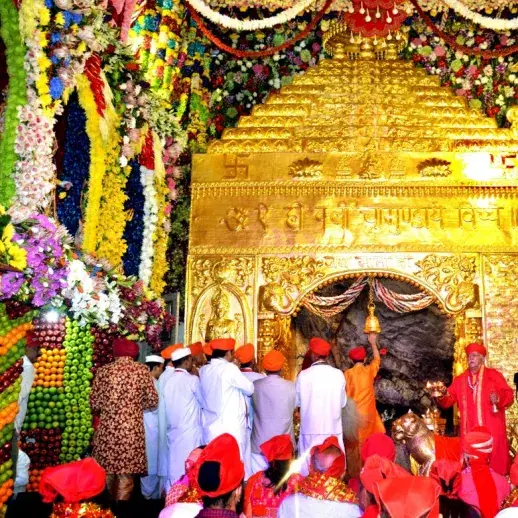
Mangla Aarti (Before Sunrise) A sacred ceremony performed by the priest just before sunrise. First, it takes place inside the sanctum and then outside the cave. The ritual involves awakening the deity, bathing her with water, milk and other ingredients.  Sandhya Aarti (Evening Ceremony) This aarti takes place after sunset, symbolizing gratitude and a divine connection with the goddess. Priests adorn the goddess with ornaments and a chunni. Lit diyas surround the idol. Chants and hymns of the goddess resonate through the sanctum, offering a truly divine experience.   Atka Aarti Only a limited number of people are allowed to sit in this aarti, which takes place in front of the holy cave of the Mata Vaishno Devi Shrine. Here, the devotees sing hymns and chant prayers, which manifest into their love for the goddess. Atka Aarti is a daily ritual that is performed twice a day, during which customary darshan is suspended. Devotees attending this aarti feel a stronger and more emotional connection with the goddess.

Nearby Sacred Places

Unnamed Place

Unnamed Place

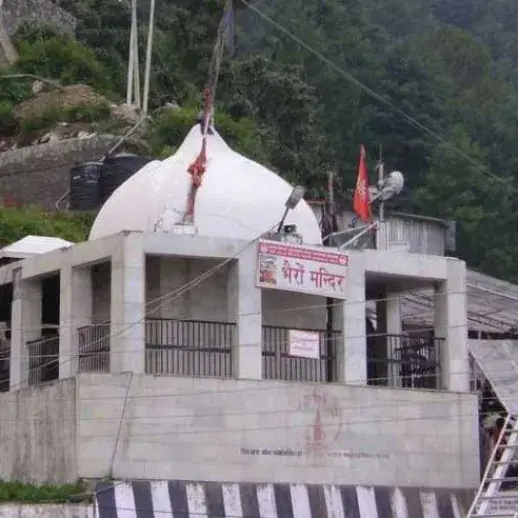
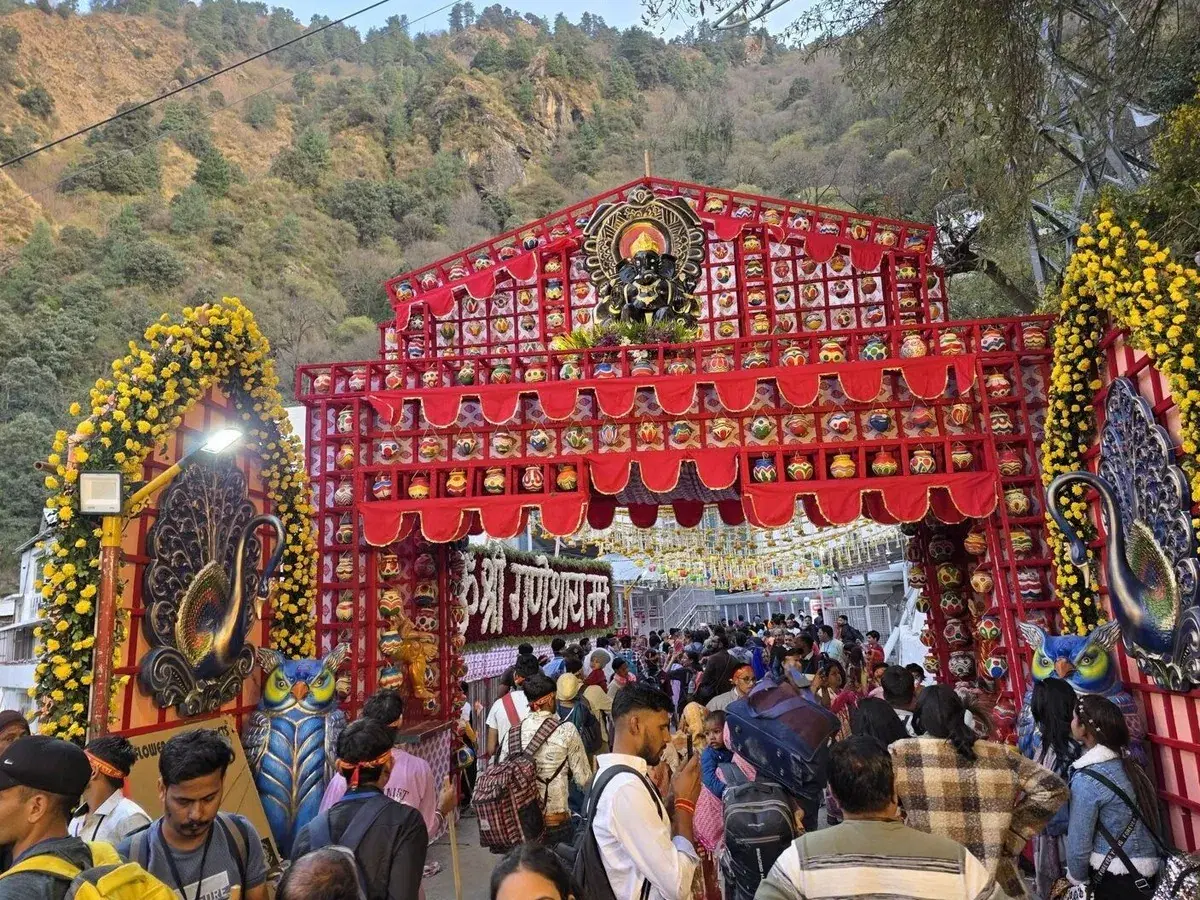
Pilgrims visiting Vaishno Devi often include a visit to the Bhairavnath Temple as part of their spiritual journey.

The trek to the temple, situated amidst stunning scenery, offers devotees an opportunity for reflection and spiritual contemplation.

Many pilgrims consider paying homage to Bhairavnath essential to complete their pilgrimage to Vaishno Devi.

It is widely believed that a visit to Vaishno Devi remains incomplete without seeking the blessings of Bhairavnath, as it is he who guards and protects the holy shrine of Mata Vaishno Devi.

According to legend, after Mata Vaishno Devi slew the demon Bhairavnath, she granted him a boon that every devotee who visits her shrine must also visit his temple to attain full spiritual merit.

Thus, the Bhairavnath Temple holds a place of profound religious significance, and devotees who complete both the darshans are said to have their wishes fulfilled and their pilgrimage truly blessed.

Auspicious Days for Darshan

Navratri

Navratri

The shrine witnesses its highest footfall during the nine days of Navratri (celebrated twice a year in spring and autumn). Special decorations adorn the cave, extended aarti programs are conducted, and the mountains echo with devotional songs day and night.
Purnima

Purnima

Full moon nights, especially Sharad Purnima (October/November), are considered particularly auspicious for darshan. The Shrine Board organizes special programs and facilities during these auspicious times.

Practical Guidance for Devotee

Some of the many offerings, or Bhet, which devotees make

Chunari (Cloth) for adorning the pindies

Dry fruits and coconuts

Gold and silver ornaments to take blessings from the goddess for a woman about to get married

Mandatory and free at Katra (online or offline). A Yatra slip is required at every checkpoint.

March - June, and September - November (pleasant weather). If you don't prefer harsh weather, avoid December-February (heavy winter) as it might snow.

The Shri Mata Vaishno Devi Shrine Board (SMVDSB) offers clean, affordable rooms and dormitories in Katra, Adhkuwari, and Bhawan. Private hotels are also available.

Airport: Jammu (50 km from Katra)

Railway: Shri Mata Vaishno Devi Katra Railway Station (direct trains from Delhi, Mumbai, Kolkata, etc.)

Road: Excellent connectivity from Jammu, Amritsar, and Chandigarh.

Helicopter Ride to Vaishno Devi

Fly from Katra helipad (2 km from the bus stand) to Sanjichhat in just 8 minutes. The helicopter carries 5-6 passengers and is perfect for both kids and seniors, offering a quick, convenient, and thrilling experience. From Sanjichhat, it’s an easy 30-minute trek (or pony ride) down to Bhawan. Book your tickets at least 2 months in advance.

Ponies & Palanquins

The 13-km trek can be challenging for children and the elderly. Choose ponies (for adults), porters (for luggage or small kids), or palanquins (for seniors). The municipal committee runs all services. Perfect for families who want everyone to reach Maa comfortably. Always confirm and fix the fare before starting.

Smart Locker facilities are available at Bhawan at Room No. 04, Waiting Hall (Ram Mandir), Durga Bhawan, and Gate No. 03. The facility at Room No. 04 is free for Yatris with confirmed bookings for SSVP, Atka Aarti, Nav Chandi Path, Group Atka, Katra–Panchi Helicopter, and Jammu–Bhawan–Jammu packages. To avail the free facility, pilgrims must get their booking receipt stamped at the Reception Counter, Room No. 04.